
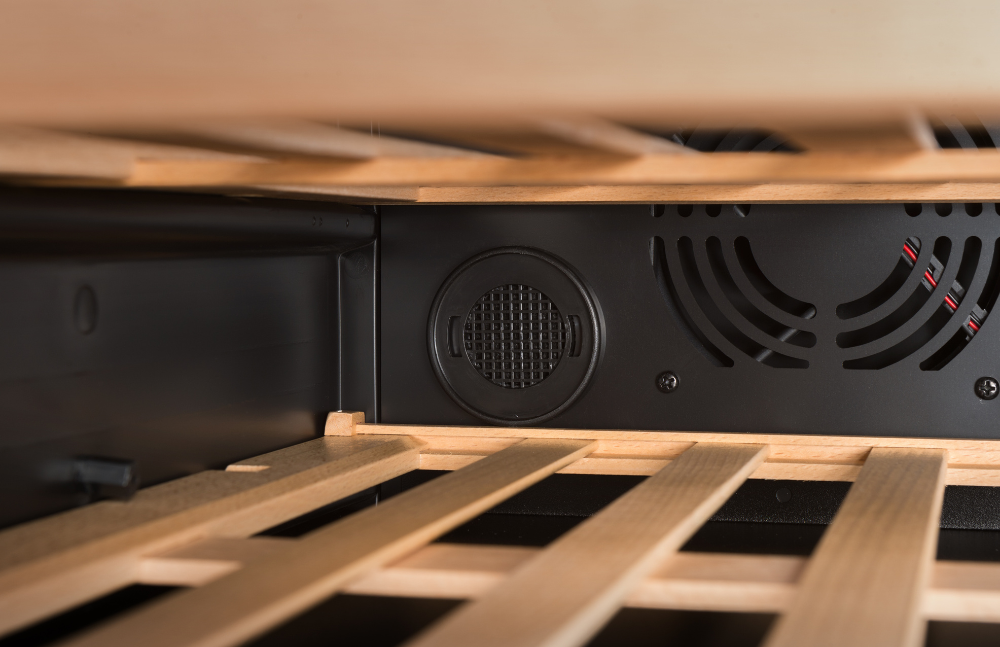
The quality of wine preservation relies on several essential parameters, including air purity and maintaining an appropriate humidity level. In a wine cellar, the charcoal filter plays a key role in air filtration and hygrometry balance.
Neglecting its replacement can alter storage conditions and affect the proper functioning of the appliance.
The role of the charcoal filter in a wine cellar
The activated charcoal filter purifies the air circulating inside the wine cellar. It captures odors, impurities, and certain particles that could alter the wine’s aromas, while renewing the air to maintain a healthy environment (free from mold and unpleasant smells).
By maintaining clean air, the filter also contributes to more stable humidity levels, which are essential for preserving corks and labels.
Consequences of a clogged or worn filter
Over time, the charcoal filter gradually loses its effectiveness. Once saturated, it can no longer properly filter the air, which may lead to unpleasant odors, humidity imbalance, and increased strain on the ventilation system.
A filter that is not replaced may indirectly increase energy consumption and accelerate wear on certain components.
How often should the charcoal filter be replaced?
Replacement frequency depends on the wine cellar model and its usage. As a general rule, it is recommended to replace the charcoal filter once a year.
Regular replacement ensures optimal air quality and preserves long-term appliance performance.
How to properly replace the filter
Replacing the charcoal filter is a simple operation that does not require specific technical skills. However, it is important to follow the manufacturer’s recommendations and use a filter compatible with the wine cellar model.
Before handling the filter, it is advisable to switch off the appliance to avoid any electrical risk.
Impact on the lifespan of the wine cellar
An efficient filtration system contributes to smoother and more stable operation. By limiting internal buildup and imbalances, regular replacement of the charcoal filter helps preserve components and reduce the risk of breakdown.
A practice that supports responsible consumption
Replacing the charcoal filter on time helps prevent more significant malfunctions and costly repairs. This preventive approach promotes durability and reduces the environmental impact associated with premature appliance replacement.
Conclusion
The charcoal filter is a discreet but essential component of a wine cellar’s proper operation. Regular replacement ensures better storage quality, controlled humidity, and extended equipment lifespan.
A simple action that contributes to more responsible and sustainable use.