
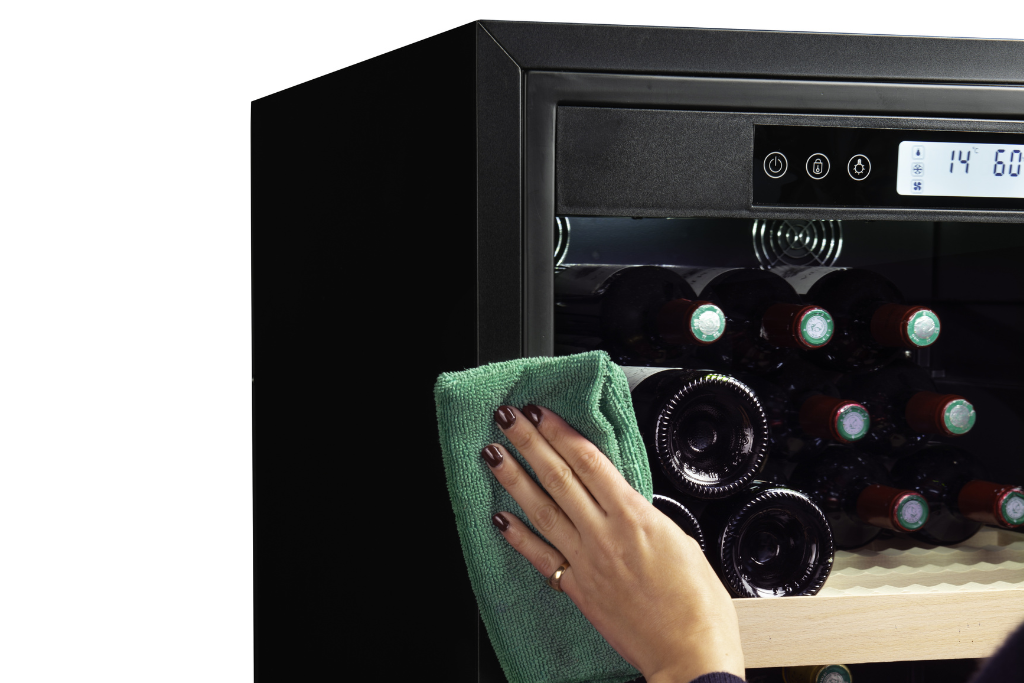
Cleaning a wine cellar is an essential step to ensure proper storage conditions and preserve the correct functioning of the appliance. However, improper methods or the use of unsuitable products may damage sensitive components and reduce the lifespan of the wine cellar.
Proper maintenance ensures equipment hygiene while limiting premature wear of its technical components.
Why cleaning must be carried out with care
A wine cellar is designed to maintain a stable environment in terms of temperature, humidity, and air quality. The regulation systems, compressor, sensors, and filters are sensitive to excessive moisture and harsh chemical products.
Improper cleaning may lead to malfunctions, corrosion of parts, or reduced appliance performance.
Preparing to clean your wine cellar
Before any intervention, it is recommended to switch off and unplug the wine cellar. Bottles should be temporarily removed and stored in a cool place away from light.
This step ensures safe handling and avoids any electrical or thermal risk.
Cleaning the interior without damaging surfaces
Interior walls and shelves should be cleaned using a soft cloth or a non-abrasive sponge slightly dampened. Lukewarm water is generally sufficient.
The use of aggressive household products, alcohol, or solvents is discouraged, as they may damage materials and leave residues harmful to wine preservation.
Maintaining shelves and supports
Removable shelves can be taken out for more thorough cleaning. They should be washed separately with lukewarm water and dried carefully before being put back in place.
Complete drying is essential to prevent moisture accumulation inside the wine cellar.
Cleaning door seals carefully
The seals ensure the airtightness of the wine cellar and should be cleaned regularly. A damp cloth is sufficient to remove dust and residues.
Clean and flexible seals help limit cold air loss and reduce compressor strain.
Components that must never be exposed to water
Certain components must never be directly exposed to water, particularly electrical parts, the compressor, and internal ventilation grilles.
It is important not to pour water directly inside the wine cellar and to always opt for controlled, surface cleaning.
Recommended cleaning frequency
A complete cleaning of the wine cellar is generally recommended once or twice a year. In addition, light and regular maintenance helps maintain a healthy environment without disrupting appliance operation.
A sustainable and responsible approach
Properly cleaning your wine cellar helps extend its lifespan, preserve performance, and reduce the need for repair or replacement. This attention to maintenance aligns with responsible consumption and the reduction of electronic waste.
Conclusion
Careful cleaning that respects sensitive components is essential to ensure the longevity of a wine cellar. By adopting simple practices and appropriate products, it is possible to maintain a high-performing appliance while reducing its environmental impact.