
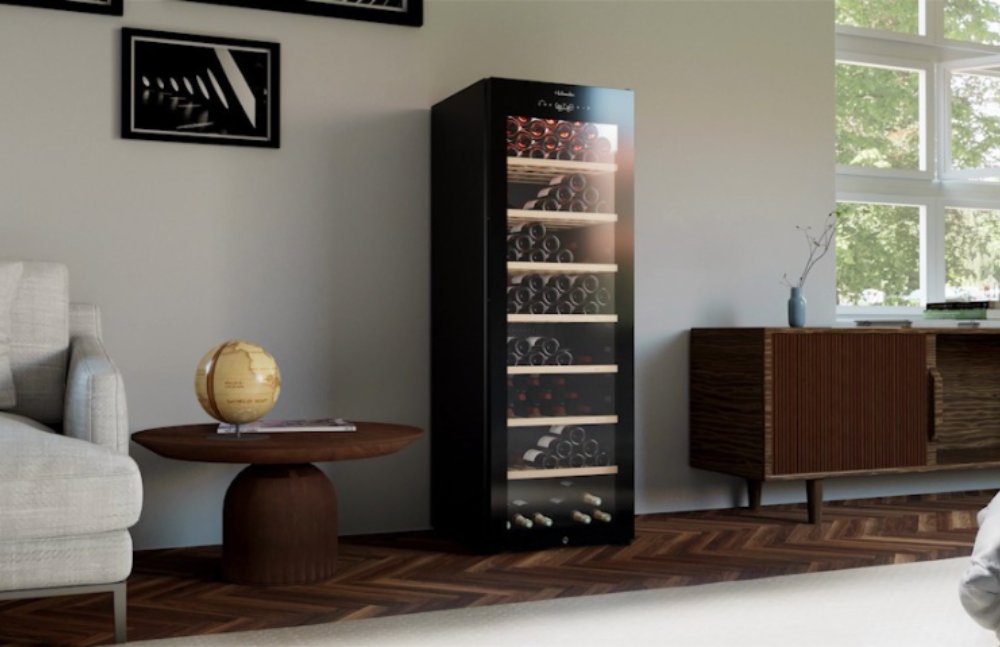
A wine cellar is a technical appliance designed to operate continuously, sometimes for many years. However, lack of maintenance or poor usage habits can significantly reduce its lifespan.
Adopting the right practices not only helps prevent premature breakdowns but also reduces the environmental impact associated with early appliance replacement.
Why maintaining your wine cellar is essential
A poorly maintained wine cellar places greater strain on its internal components, particularly the compressor, ventilation system, and temperature regulation system.
This overuse can result in higher energy consumption, accelerated wear of parts, and an overall decline in performance.
Conversely, regular maintenance helps maintain optimal operation and supports a sustainable approach.
Essential steps to extend the lifespan of your wine cellar
Clean the interior regularly
It is recommended to clean the inside of the wine cellar once or twice a year. Shelves and interior walls should be cleaned with a soft, slightly damp cloth. Abrasive or strongly scented products should be avoided to prevent damage to materials or disruption of the storage environment.
Check and clean the ventilation
Ventilation plays a crucial role in the proper functioning of the wine cellar. Air vents, located at the back or lower section depending on the model, should be regularly dusted. Insufficient airflow leads to excessive compressor strain and increased electricity consumption.
Monitor the condition of the door seals
The seals ensure the airtightness of the wine cellar. It is important to check their cleanliness and flexibility. Dirty or worn seals cause cold air loss, forcing the appliance to run longer to maintain the desired temperature.
Maintain a stable temperature
Frequent temperature fluctuations strain internal components. It is advisable to set a temperature suitable for the type of wine stored and avoid repeated adjustments. A stable temperature helps preserve the compressor and optimize energy consumption.
Respect the loading capacity
A wine cellar should not be overloaded. Excessive or poorly distributed loading prevents proper airflow and may create uneven temperature zones. Respecting the capacity recommended by the manufacturer ensures more efficient and durable operation.
Mistakes to avoid
Certain practices significantly reduce the lifespan of a wine cellar. Installation in a poorly ventilated space, proximity to heat or cold sources, or lack of maintenance over several years are among the most common causes of premature failure. Repeated plugging and unplugging is also discouraged.
A more responsible approach to use
Maintaining your wine cellar extends its lifespan, limits electronic waste, and reduces the environmental footprint associated with manufacturing new appliances. This approach is fully aligned with responsible and sustainable consumption.
Conclusion
A few simple and regular actions are enough to preserve the performance and longevity of a wine cellar. Maintenance remains the most effective way to prevent breakdowns, reduce energy consumption, and delay appliance replacement.